Beverage Innovation Offer

A drink can taste great in a lab and still collapse the moment it hits real production. Leaders have seen batches dumped over minor pH shifts. Founders have been blindsided by packaging minimums that dwarf their entire first funding round. That’s the part nobody posts about on LinkedIn.
The opportunity is real. The functional drinks market is heading towards a value of $314.89 billion by 2033. Investors notice that. Retail buyers do too. But scaling a beverage isn’t a slide in a deck. It’s ingredient lead times, dosage limits, shelf-life math, and co-packers who won’t move their line for a 2,000-unit dream.
Agilery’s beverage innovation offer was built for that stretch between idea and first pallet. It brings together focused beverage product development, rigorous beverage formulation services, and coordinated beverage contract manufacturing so brands can reach first production in roughly five to six months. Full documentation. Supplier visibility. Clear regulatory checks under EU labeling rules. No recipe lock-in.
For teams in early-stage beverage brand development, we deliver structured beverage development services anchored in practical experience.
The Challenge of Entering the Beverage Market

The beverage business looks crowded from the outside. It’s worth more than $2.03 trillion. Shelves are packed. New SKUs appear every month. What you don’t see is how many concepts stalled before they ever reached that shelf.
Start with minimums. Traditionally printed cans can require truckload quantities. Over 200,000 units is a typical MOQ for offset printed aluminum cans. That’s before you’ve tested whether consumers even like your flavor. Ingredient suppliers aren’t much different. Specialty actives, certain extracts, custom flavor systems. Ten to fifty kilos per order isn’t unusual. For a startup, that’s capital sitting in a warehouse.
Then there’s scale. A recipe that works at benchtop volume doesn’t automatically behave in a 5,000-liter tank. Proteins foam. Botanicals haze. Carbonation shifts mouthfeel. pH drifts and suddenly your shelf-life estimate looks optimistic. If you’re building something in functional beverage development, dosage limits and claims rules add another layer. Under Regulation - 1924/2006 - EN - EUR-Lex, you can’t imply a health effect without substantiation. That’s not a detail you fix after printing labels.
The supply chain itself is fragmented. Ingredient brokers. Flavor houses. Labs. Co-packers. Logistics. Each has its own lead times and constraints. Without tight coordination, production slots get missed. Artwork files are rejected. A single delay ripples.
Intellectual property becomes another pressure point. Some contract beverage manufacturing models keep control of the formula. Others tie you to one facility. If your volumes grow or strategy changes, you’re stuck renegotiating from a weak position.
Beverage Innovation: What the One-Stop Model Includes
Most beverage projects fall apart in the handoffs. One party develops the recipe. Another tries to scale it. A third realizes too late that an ingredient doesn’t meet dosage limits in the target market. By then, time is gone and so is budget.
Agilery offers a beverage innovation service that keeps that from happening by running development and first production as one continuous track.
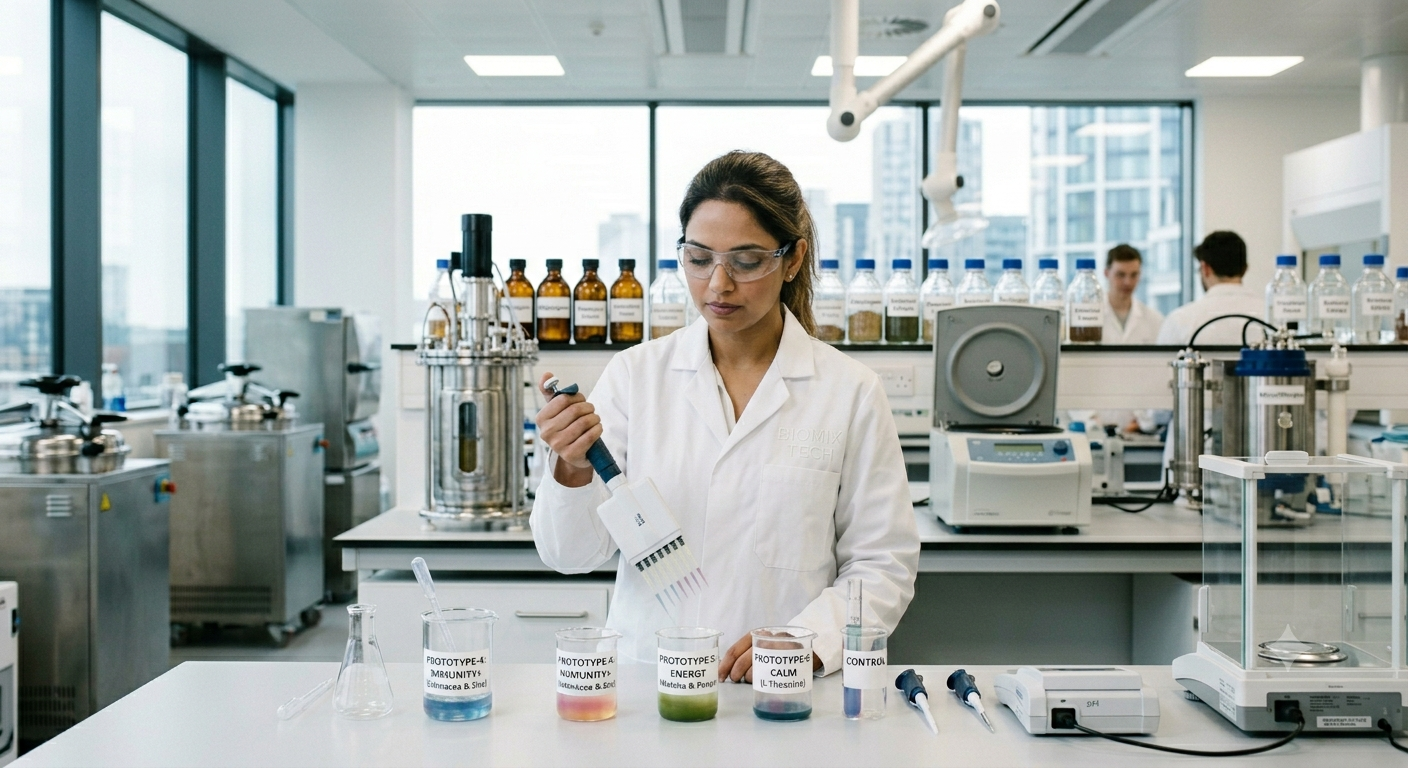
The work starts with a technical kick-off. Product vision gets translated into specifics: taste direction, ingredient boundaries, “must-haves” and “no-gos,” packaging assumptions. From there, the team conducts desk research and regulatory checks, mapping potential raw materials that actually fit the concept. Samples are ordered with non-negotiated quotes, declared MOQs, and lead times attached.
Prototyping is hands-on. Two focused days building variants, followed by live iteration with the client on site. During those sessions, nutritional values, pH levels, and dosage ranges are calculated alongside sensory work. Early cost indications are modeled. An Excel sheet allows quick adjustments while tasting. It’s practical, fast, and documented
When a recipe is selected, Agilery delivers a technical report: full formula, supplier contacts with pricing and MOQs, validated regulatory dosage ranges, nutritional values, shelf-life estimates based on packaging, and scale-up watch-outs. Intellectual property transfers to the client
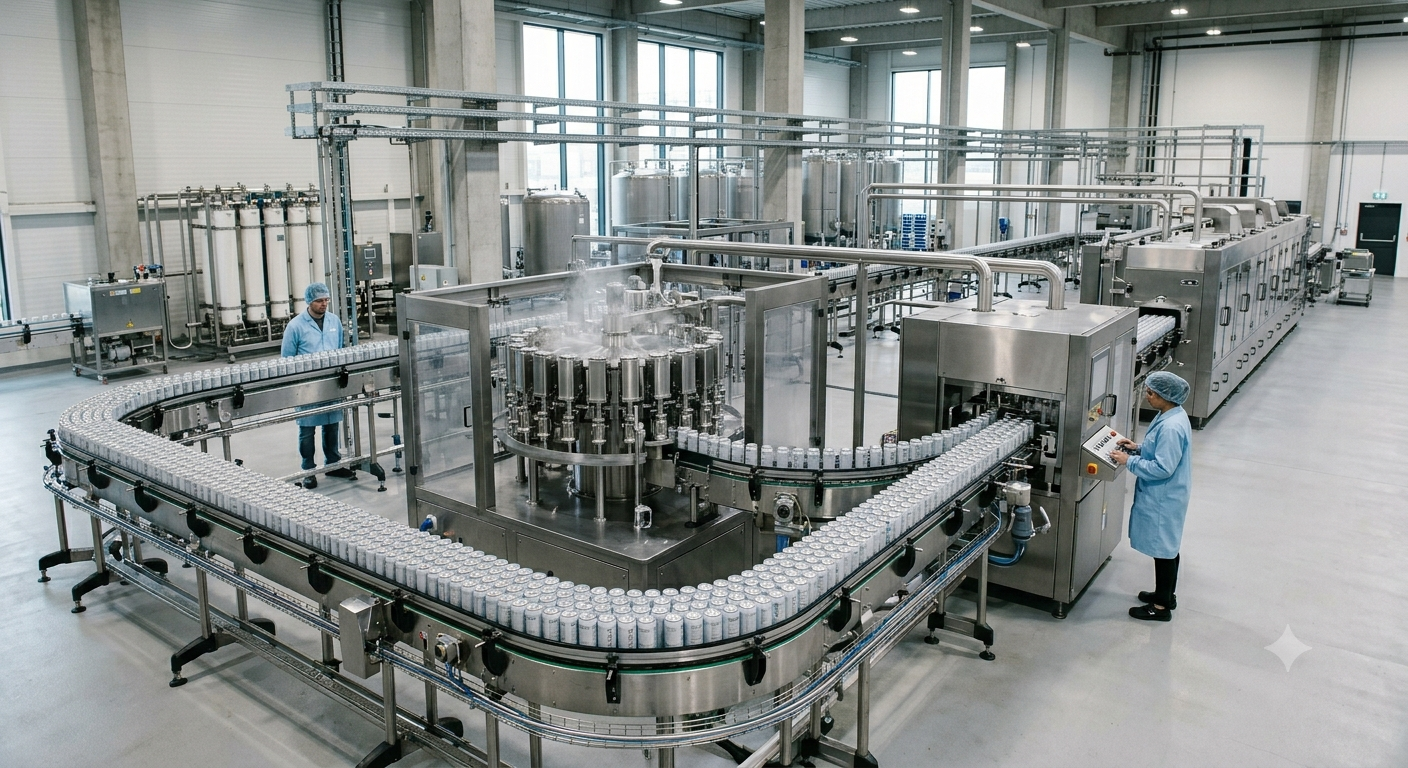
First batch manufacturing follows. Ingredient and primary packaging sourcing, mixing, carbonation, bottling or canning, stability step, palletizing, production scheduling, label compliance check in one lead market, microbiology test if required, and end-to-end quality oversight are coordinated centrally
It’s structured beverage product development tied directly to real production.
Beverage Product Development: From Concept to Market in 5–6 Months
Speed in beverage innovation is rarely about rushing. It’s about sequencing the right decisions early so nothing blocks production later.
First we scope. One or two weeks, maybe. The point is to get the product defined. Not just flavor. Function, ingredients, packaging, rules, even if it should feel like something already out there. Raw materials get sourced. Prototypes get built. Formulas get adjusted while the client watches. We check nutrition. pH. Dosage. Costs get modeled. While the drink is still moving around in the lab. By the end, the recipe works at scale. It’s documented. Ready to hand over.
Production setup takes another two to three months. Agilery assigns a co-packing partner based on geography, packaging format, automation level, and volume. Ingredients and primary packaging are ordered. The production slot is booked. Label compliance is reviewed for one lead EU market. If needed, microbiology testing is arranged. On production day, oversight is active.
Typical first deliveries range between 4,500 and 6,000 units, often across up to three SKUs. Add the phases together and you’re looking at roughly five to six months from initial discussion to sales-ready product.
Flexible Supply Chain Without Lock-In
A lot of beverage founders learn too late that their first production partner effectively owns their future. The recipe lives in someone else’s system. The sourcing contacts are opaque. Switching facilities becomes expensive and political.
This model avoids that trap.
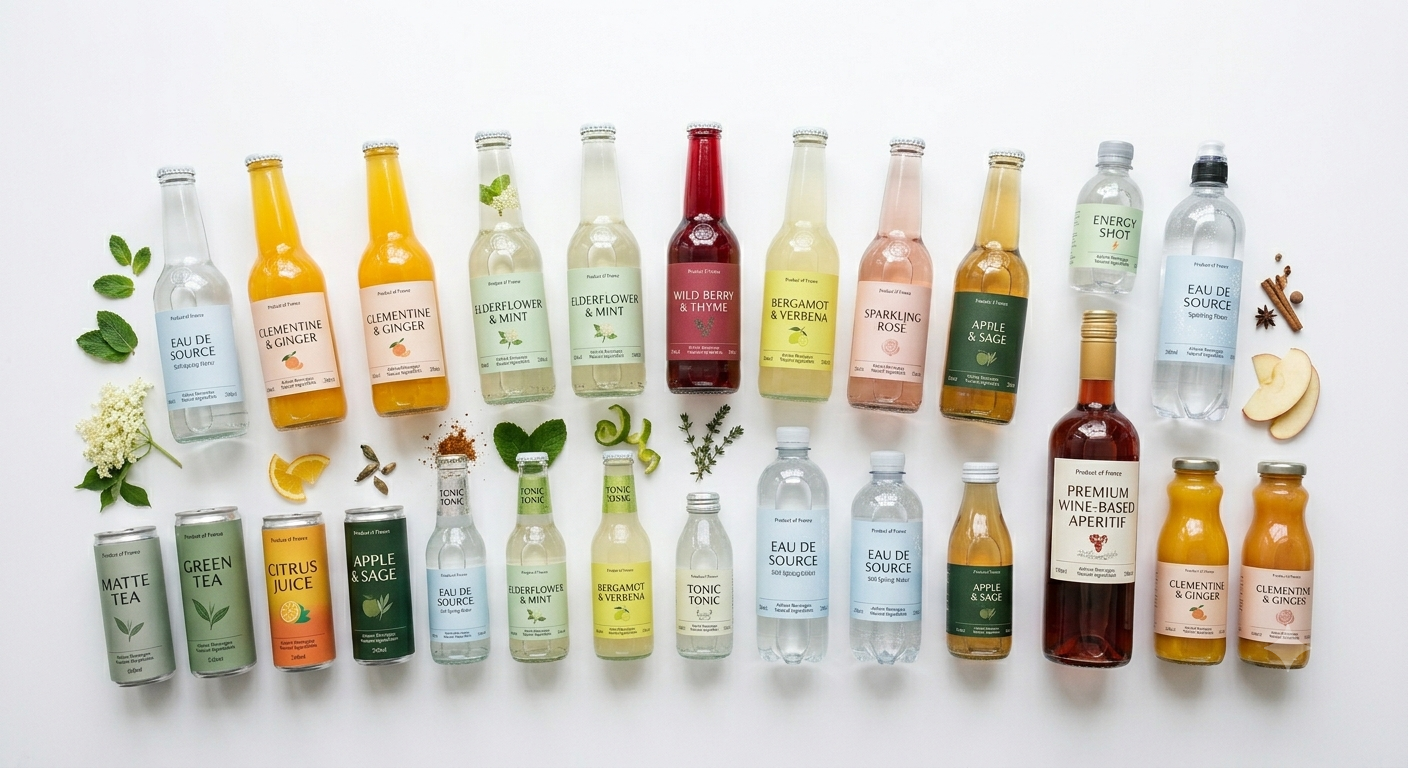
Production is set up through a fixed network of European co-packers across multiple countries and automation levels. Cans, PET, glass. Manual lines for smaller volumes, industrial lines for scale. The partner is selected based on format, geography, and realistic volume targets, not convenience.
More importantly, the formula and documentation do not stay with the manufacturer. Full technical documentation is delivered to the client. Ingredient suppliers are listed. Dosage ranges are specified. Shelf-life assumptions are recorded. Scale-up considerations are noted. That means if volumes grow or strategy shifts, the brand is not negotiating from zero.
There’s also flexibility at the volume level. First runs can begin at smaller unit counts, with transparent setup fees and cost breakdowns. As volume increases, per-unit costs decrease. That sounds obvious, but seeing the structure early changes how founders plan capital.
This is where practical beverage supply chain optimization becomes tangible. You’re not tied to a single plant. You’re not dependent on one ingredient channel. You have options, and documented leverage.
For brands entering contract beverage manufacturing for the first time, that freedom matters more than it sounds.
Solving Key Industry Pain Points
If you’ve spent any time around beverage innovation, you know the problems pile up.
Take minimums. A founder might need 2,000 units to test a market. The can supplier quotes a printed run in the six figures. An ingredient house asks for 25 kilos of a specialty extract. That inventory sits on the balance sheet long before it sits on a shelf. It’s one of the fastest ways early capital disappears.
Agilery works to address those issues. Volume options are defined early. Setup fees are clear. Per-unit cost ranges are broken down into ingredients, packaging, and processing. When the numbers are visible, decisions get more rational. Sometimes that means adjusting format. Sometimes it means reformulating to avoid a problematic raw material. Better to make that call in week three than on production day.
Lab samples create their own illusions. A prototype poured in a small room behaves nicely. Scale it up and you may get haze, separation, carbonation drift. Mockups are offered, but with defined limitations and shelf-life windows. They’re tools for tasting and pitching, not shortcuts around industrial validation.
Coordination matters. Ingredients need ordering. Packaging has lead times. Artwork needs approval. The co-packer has a schedule. Miss one of these and the timeline slips. Running it as a single project keeps surprises down. Less last-minute shipping. Fewer relabels. Less waste.
Beverage Innovation: Who This Service Is For
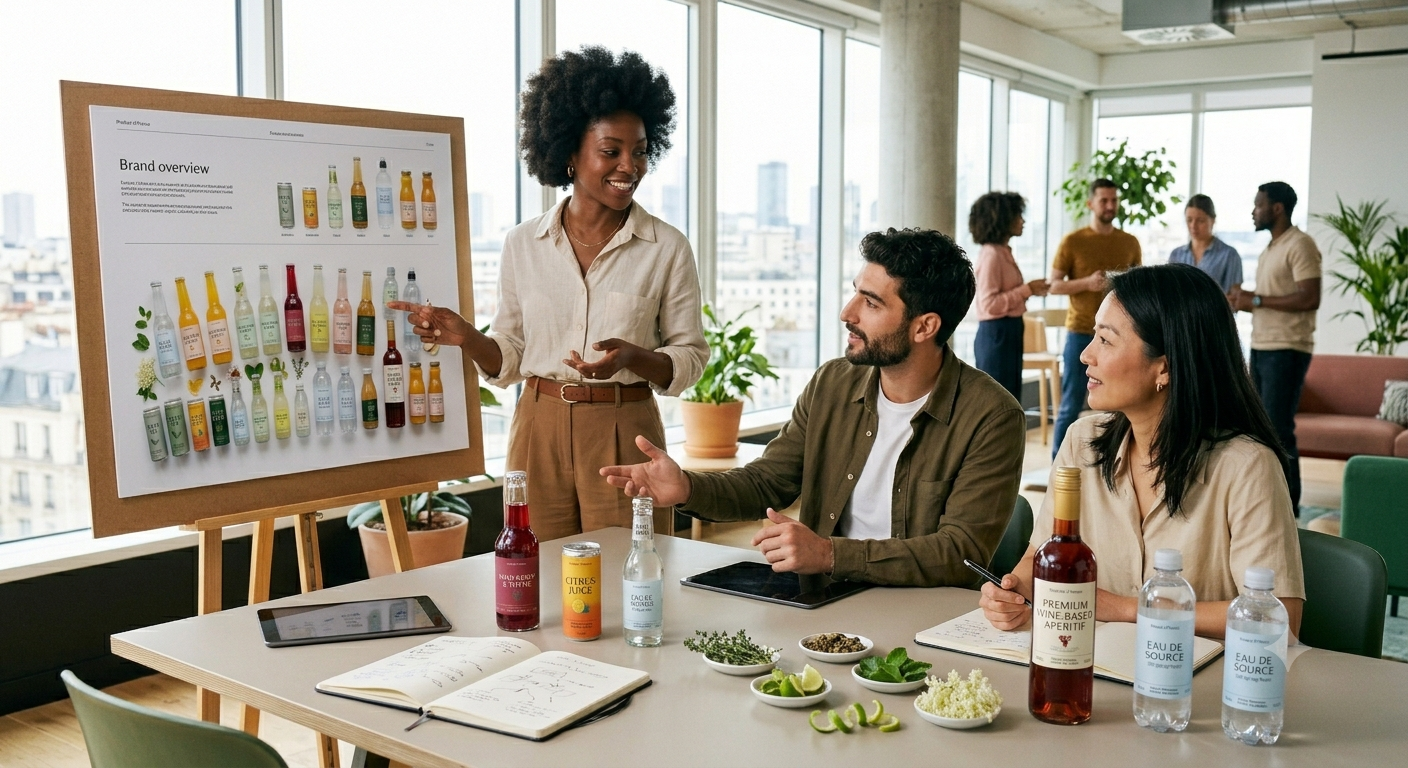
Some teams need creative direction. Others need someone to keep production from going sideways. This offer is built for the second group.
It tends to fit:
- Beverage startups that have a clear concept but no in-house technical team. Founders who can define the flavor and positioning, but don’t want to negotiate directly with five different suppliers and a co-packer before they’ve sold a single case.
- Brands working on energy drink development where dosage ranges, caffeine levels, and active ingredients have to be calculated precisely. A few milligrams off can mean reformulation or regulatory trouble.
- Companies entering functional beverage development. These aren’t simple formulas. Solubility and stability can trip you up. Taste balance matters as much as anything else.
- Retailers or private label teams testing beverage brand development without an R&D group. They can try formats. Test volumes. See what works before committing to bigger runs.
- International brands entering the EU market who need label checks in at least one lead country and clarity on nutrition and claims rules before printing packaging.
- Teams without operational depth in contract beverage manufacturing who want defined timelines, documented suppliers, and production oversight instead of figuring it out mid-run.
It’s less suited for companies looking for mass production from day one. This model is built for structured entry. Controlled first batches. Clean handover.
Transforming Beverage Innovation with Agilery
The first batch is only the beginning. Getting a product into market is one milestone. Building a repeatable system behind it is another.
The long-term plan extends beyond development and first production. The network of manufacturing partners continues to expand across Europe, covering different formats, automation levels, and geographic needs. That matters once volumes increase or distribution widens.
There are also additional layers in progress: a structured distributor network, a B2B beverage webshop, fulfillment support for sampling and direct-to-consumer sales, and coordinated promotional activity reserved for One-Stop customers. These are practical extensions, not side projects. They’re designed to support brands once product-market fit is proven.
The goal is simple. Move from concept validation to revenue faster, without locking brands into rigid supply chains. If you’re exploring a new drink, the first step isn’t full production. It’s a feasibility conversation. Nail the format. Clarify the functional profile. Test the numbers. Then development can move fast, without surprises.
Ready to begin? Book a feasibility call and see whether the concept stands up to real manufacturing conditions.
Frequently Asked Questions
We sit down and define the drink in practical terms. Flavor direction. Ingredient boundaries. Packaging format. Target cost. Then we build it. Ingredients are sourced with real MOQs attached. Prototypes are made and adjusted in real time. Nutrition values and pH are calculated. Dosage limits are checked before anything moves forward. Once the recipe holds up, first production is organized. Ingredients and packaging are ordered. The production slot is secured. Labels are reviewed for one EU market. You receive the technical file and the finished product.
If decisions are made quickly and suppliers don’t delay shipments, development takes around six to eight weeks. Production setup adds another two to three months. Most projects reach finished goods in about five to six months.
You do, under the standard development route. The documentation, supplier references, and formulation details are transferred. You’re not bound to a single manufacturer by default.
Around 2,000 units is possible, depending on format and formulation. Setup fees and estimated unit costs are shared early, before production is booked.
Yes. Caffeine systems, electrolytes, botanicals, proteins, collagen. Dosage and stability are checked during development. The aim is to prevent surprises once the line starts running.